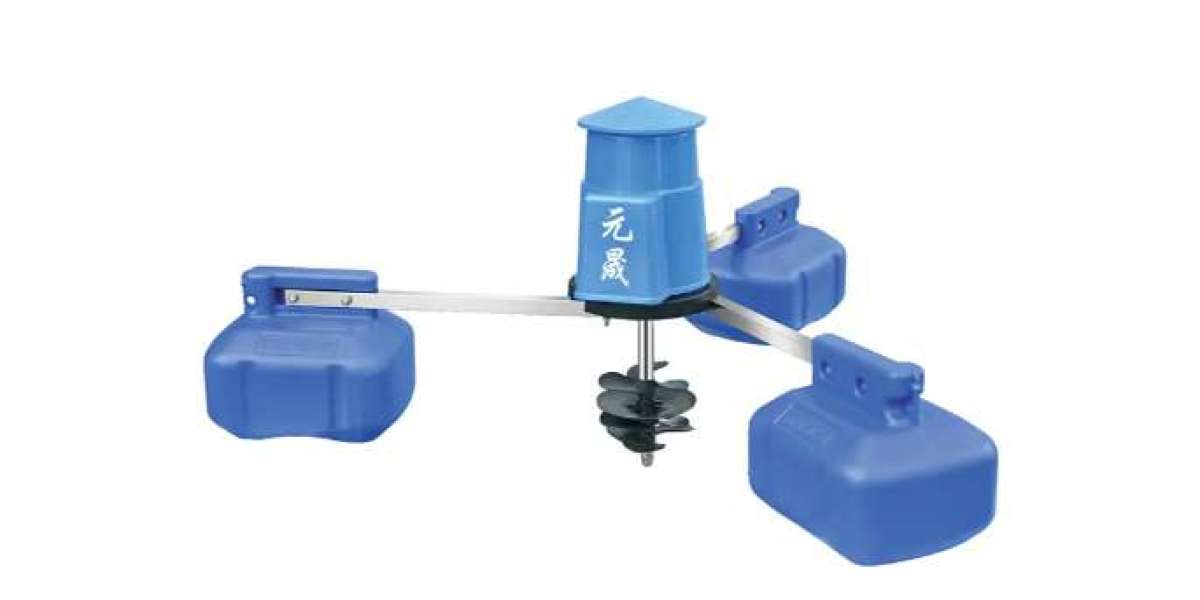

The Aquaculture Machine Aerator is becoming an essential component in modern fish and shrimp farming operations, as producers increasingly focus on maintaining optimal water quality and maximizing productivity. Aeration supports dissolved-oxygen levels, circulation and mixing in ponds and tanks, all of which affect growth, survival and yield of aquatic species. With the global aquaculture equipment market expanding, demand for efficient and reliable aerators is gaining traction.
Recent market data show that aeration systems form a substantial segment of aquaculture-equipment investment. As farms intensify, the need for high-performance aerators that offer improved oxygen transfer, energy efficiency and automation grows. Users are asking: how much oxygen per kilowatt hour can this machine deliver? What depth and circulation radius can it cover? Such questions reflect evolving expectations of the aerator beyond simple mixing or paddle‐wheel action.
Manufacturers are responding with new models featuring fine-bubble diffusers, real‐time sensors for dissolved-oxygen (DO) monitoring, modular floats and IoT connectivity for remote oversight. These features help operators track performance and adjust settings without manual checks. In pond systems of several thousand square meters and depths over one metre, an aerator capable of deep mixing and uniform DO distribution is increasingly valued.
From a cost-control viewpoint, the aerator’s energy consumption and maintenance requirements are key. Farms report that upgrading to newer aerator models reduces power usage and reduces dead-zones of low circulation, leading to healthier biomass. For the production teams overseeing installation, aspects like buoy design, motor cooling and corrosion-resistant materials become relevant when selecting equipment suited for long-term use.
In conclusion, the Aquaculture Machine Aerator stands as a vital piece of infrastructure in contemporary aquaculture systems. Its role in water quality, circulation and productivity ensures that farms focused on sustainability and yield will continue to rely on advances in aerator technology.